
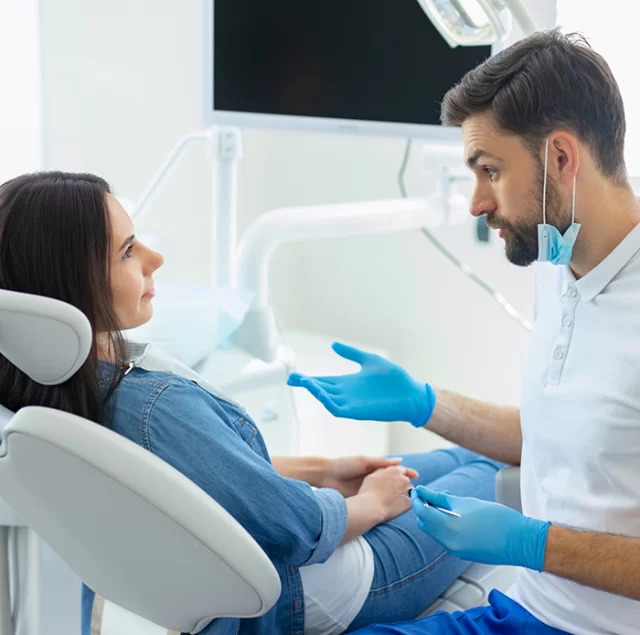
What’s Really Happening Beneath Your Dental Crown?
A dental crown can restore a damaged or weakened tooth, but it does not make the natural tooth underneath it immune to decay. Yes, you can get a cavity under a dental crown. Recognizing the warning signs early can help protect your tooth and prevent a small problem from becoming more complicated.
At Kimberley Lane Cosmetic and Family Dentistry, Dr. Frank Incrapera and Dr. Vince Tran provide comprehensive dental care for patients throughout Houston, TX.
If you’ve noticed tooth sensitivity, pain when biting, gum irritation, a bad taste, or changes around a crowned tooth, call (713) 827-8200 to schedule an appointment and find out what is happening beneath the surface. Our Houston dentists also welcome patients from Bellaire, West University Place, and Memorial.
 Why We’re the Trusted Choice for Houston Dentistry
When you’re worried about a cavity under a dental crown, experience and education matter. At Kimberley Lane Cosmetic and Family Dentistry, patients benefit from the extensive clinical backgrounds of Dr. Incrapera and Dr. Tran.
- Dr. Incrapera has more than 40 years of dental experience, earned his dental degree from The University of Texas Dental School in Houston, and completed postgraduate education focused on restorative and cosmetic dentistry. He is also a Fellow of the Academy of General Dentistry (FAGD), reflecting his commitment to continued professional education.
- Dr. Tran brings more than a decade of dental experience along with advanced residency training at the Orlando Veterans Affairs Medical Center, where he developed additional skills in restorative and surgical dentistry.
This depth of training is especially valuable when evaluating a crown. A proper assessment involves more than looking at the crown itself. Dr. Incrapera and Dr. Tran can evaluate the natural tooth beneath the crown, crown margins, surrounding gums, bite, and potential decay to determine what may be causing your symptoms.
How Can a Cavity Develop Under a Dental Crown?
While a porcelain, ceramic, or metal cap cannot decay, the natural tooth structure underneath remains susceptible to bacteria. A cavity under dental crown restorations usually forms along the margin—the microscopic line where the bottom edge of the crown meets your natural tooth.
Over time, dental cement can wear away, or gums can recede, exposing the softer dentin below. Plaque and food particles accumulate in these tiny gaps, giving acid-producing bacteria access to the natural tooth structure holding your restoration in place.
Signs of a Cavity Under Your Dental Crown
Detecting decay under dental crown placements can be tricky because the cap covers the majority of the tooth. However, several distinct signs of decay under a crown indicate it is time to visit Dr. Frank Incrapera and Dr. Vince Tran for an evaluation:
- Localized Sensitivity: Sharp discomfort when consuming hot coffee, cold drinks, or sweet treats.
- Bite Pressure Pain: A dull ache or sharp pain when chewing or biting down on food.
- Visible Margin Changes: A dark line, black spot, or gray shadow appearing along the gumline at the base of the cap.
- Gum Inflammation: Redness, swelling, or bleeding limited to the gum tissue around the crowned tooth.
- Persistent Bad Taste: Unpleasant odors or tastes leaking from around the restoration borders.
- Restoration Instability: A cap that feels loose, shifts slightly, or clicks when you speak or chew.
If you notice these or similar symptoms, call our Houston dental practice right away at (713) 827-8200 to schedule an appointment. Our dentists can evaluate your capped tooth and determine the right treatment plan.
There’s a Cavity Under My Crown! What Are The First Steps to Treatment?
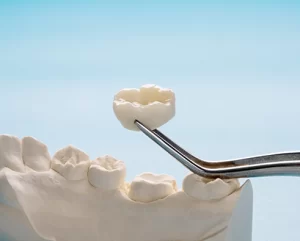
If you suspect tooth decay under crown work, acting quickly prevents minor damage from escalating into severe pain or structural loss:
- Schedule an Evaluation: Call our team at (713) 827-8200. Dr. Tran or Dr. Incrapera will take targeted digital X-rays to assess the depth of the decay beneath the cap.
- Clear the Decay: In rare, very early cases, localized decay at the outer margin can be cleaned and sealed with a small composite filling. However, most situations require gently removing the old cap to access and thoroughly clean the underlying natural tooth.
- Rebuild the Core: Once all decay is eliminated, the remaining healthy tooth structure is disinfected and reinforced with a durable core buildup.
- Place a Fresh Restoration: A new custom-fitted crown is designed to seal the tooth perfectly, restoring complete strength, function, and aesthetics. If bacteria reached the inner nerve, a root canal will be performed prior to capping to eliminate pain and infection.
Preventing Cavities on Crowned Teeth
Protecting your restored teeth requires dedicated daily oral hygiene and proactive care:
- Clean the Margins Thoroughly: Gently brush at a 45-degree angle along the gumline to clear plaque from the border of the crown.
- Floss Every Single Day: Thread dental floss or an interdental cleaner completely down to the gumline between teeth to prevent bacterial buildup along hidden margins.
- Incorporate Fluoride: Use a fluoride toothpaste or mouthwash to strengthen exposed natural root surfaces against acid attacks.
- Maintain Regular Checkups: Visit Kimberley Lane Cosmetic and Family Dentistry in Houston twice a year so Dr. Incrapera and Dr. Tran can monitor the structural integrity of your restorations long before symptoms start.
Dedicated Care for Houston Smiles
You deserve to live, laugh, and eat without worrying about hidden tooth pain or unstable dental work. Losing a protective restoration to hidden decay can feel frustrating, but you do not have to navigate your oral health alone.
Whether you’re from Bunker Hill Village, Piney Point Village, or Hunters Creek Village, our dedicated team is here to restore your comfort and peace of mind. Take control of your oral health before a small issue becomes a painful emergency—call our Houston dental office at (713) 827-8200 to schedule your consultation.